Appropiate Attire
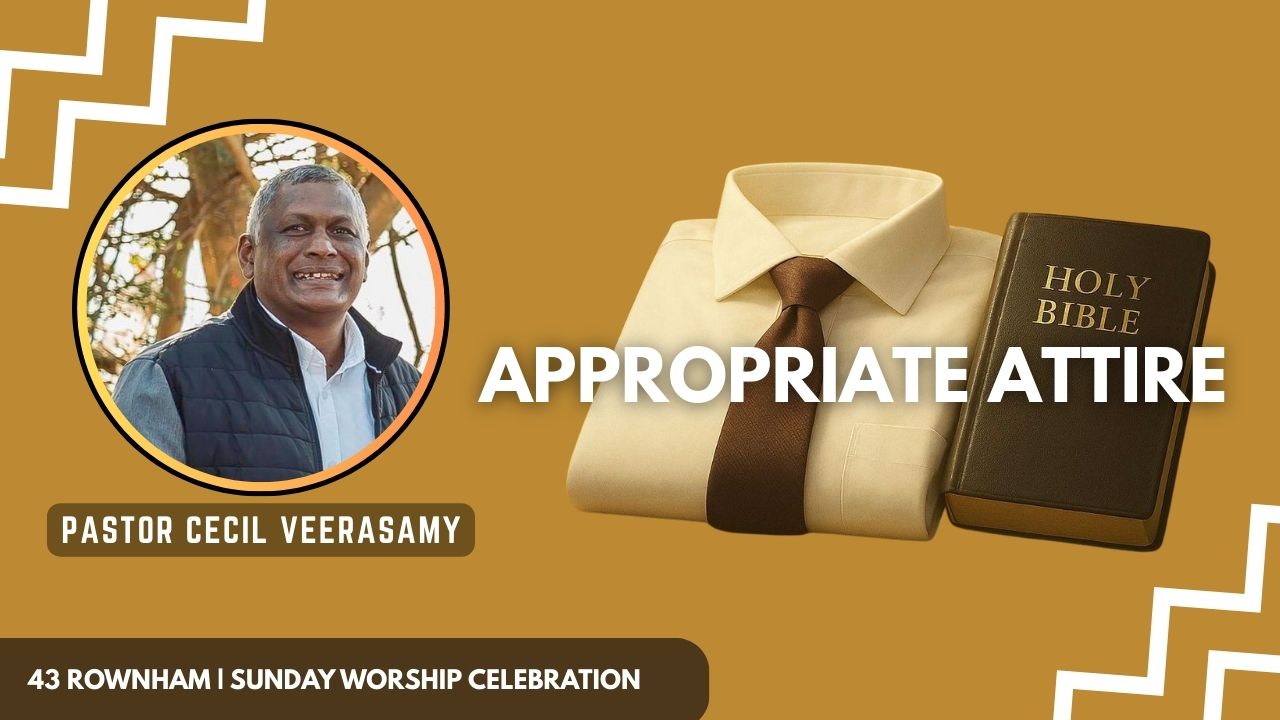
Appropiate Attire
Appropriate Apparel
The Core Premise The message uses the Parable of the Great Banquet (Matthew 22) to illustrate that while the invitation to God’s Kingdom is extended to everyone, entering requires a fundamental transformation. It challenges the believer to move beyond a “ticket to heaven” mentality and embrace a life that reflects the character of the King.
Key Narrative Arcs:
- The Invitation Extended: The speaker traces the lineage of God’s call from the nation of Israel to the “Gentiles.” Drawing from Romans 11, he explains how we are “wild branches” grafted into a holy root. This inclusion is not a cause for pride, but a call to realize we are where we are (in our jobs, schools, and communities) by divine design—”for such a time as this.”
- The Requirement of the Garment: The central conflict of the sermon focuses on the guest who was cast out for lacking wedding clothes. The speaker clarifies that in the Kingdom, the King provides the attire. To refuse the “wedding garment” is to insist on one’s own righteousness. The message warns against “accessorizing” a religious life while remaining unchanged inside.
- The Cost of Following: Using the biblical examples of Elisha and Blind Bartimaeus, the speaker illustrates that putting on the new garment requires “throwing off” the old. Bartimaeus discarded his beggar’s cloak (his old identity and security) before he could even see, signaling a point of no return in his commitment to Christ.
- The Mirror of the Word: The sermon concludes with a call to self-examination. It warns the church against a “religious spirit” that judges the “falter” of a brother, reminding the congregation that they are a hospital for the broken, not a showroom for the perfect.